Is my child ready for Primary 1?
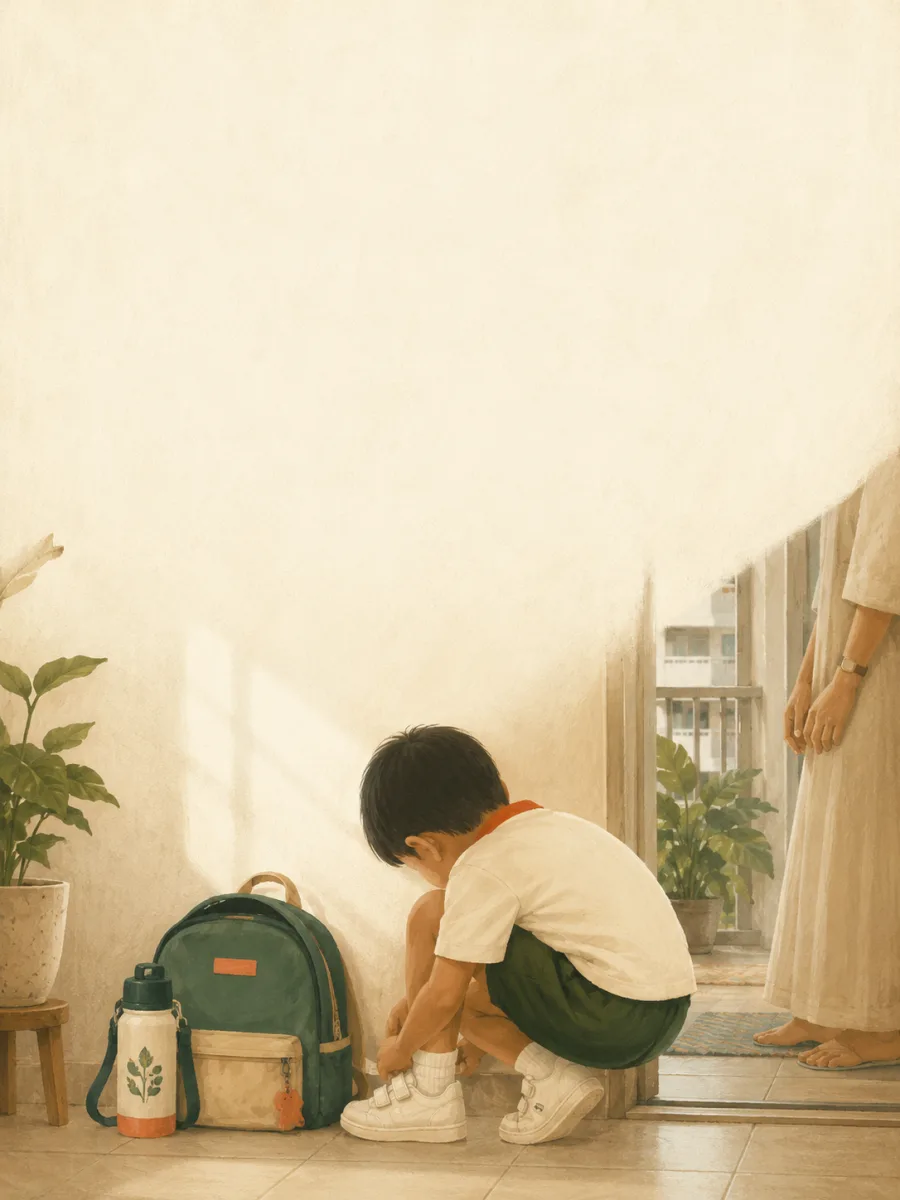
If you're worried your child can't read fast enough or write neatly enough, breathe. In Singapore, 'school-ready' has very little to do with academics, and almost everything to do with whether your child can manage their day with confidence.
Last reviewed against official sources: 5 July 2026
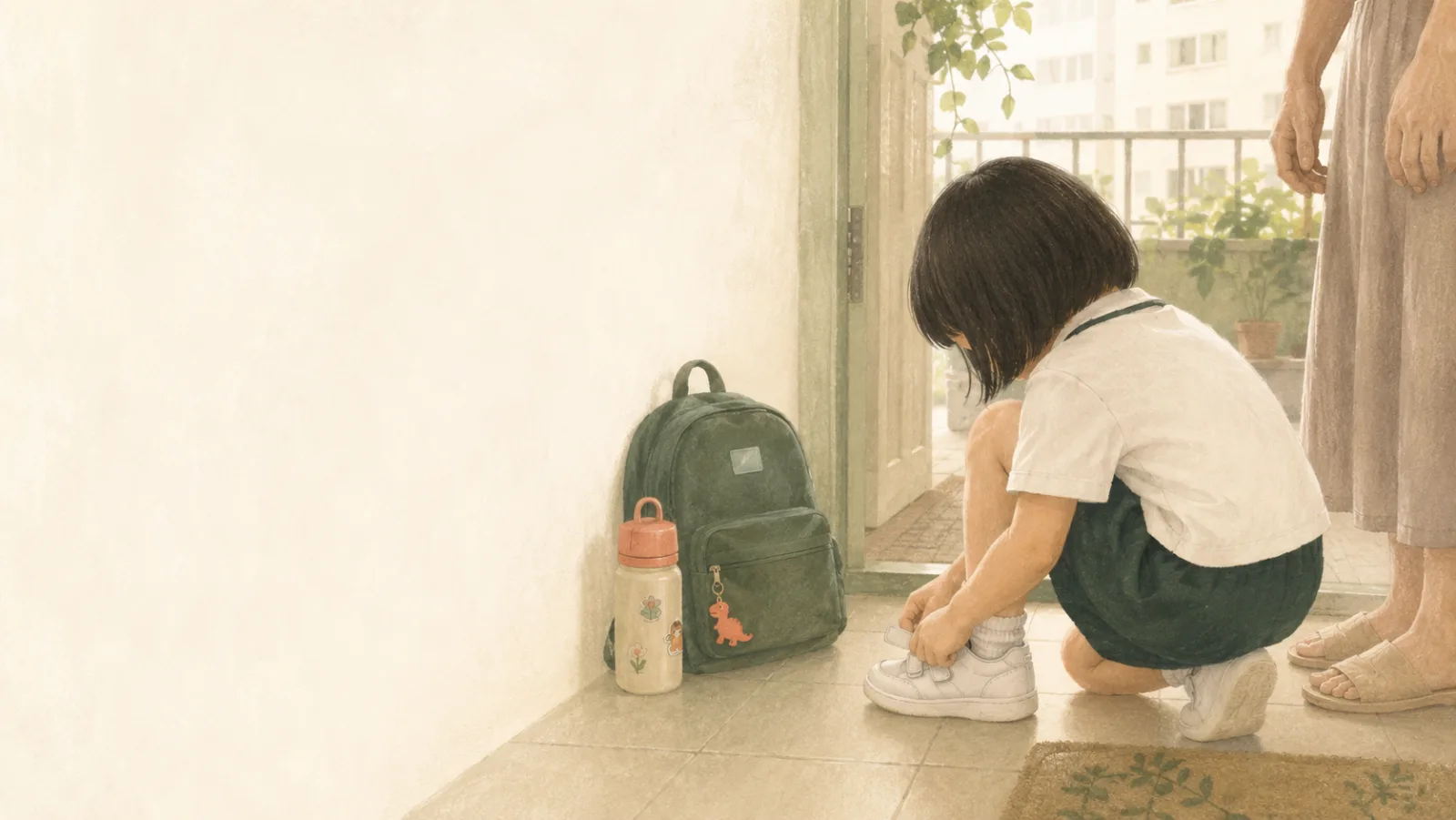
If you're worried your child can't read fast enough or write neatly enough, breathe. In Singapore, 'school-ready' has very little to do with academics, and almost everything to do with whether your child can manage their day with confidence.
Last reviewed against official sources: 5 July 2026
So the real answer to "is my child ready?" is rarely about flashcards. It's about the small, practical skills that let a six-year-old get through a school day without an adult hovering, and the emotional confidence to ask for help when they need it.
A no-panic readiness checklist
You don't need every box ticked by day one, these develop over the months before (and after) school starts. Use it as a gentle guide, not a test.
Self-care & independence
- Goes to the toilet and washes hands alone
- Opens lunch boxes, water bottles and food packets
- Finishes a meal within recess time
- Packs and unpacks the school bag
- Manages buttons, zips and changing for PE
Social & emotional
- Greets teachers and classmates
- Takes turns and shares
- Asks an adult for help when stuck
- Communicates needs and feelings
- Copes with small frustrations and changes
Focus & instructions
- Follows 2-3 step instructions
- Settles and focuses for 15-30 minutes
- Recognises (and ideally writes) their own name
- Knows letter sounds and counting, familiarity, not mastery
What to do in the months before
Keep it light and woven into daily life, not a bootcamp:
- Let them do it themselves. Packing the bag, managing canteen money, dressing, practise the real things.
- Rehearse asking for help. Who to ask → say the problem → listen → thank them. It's a genuine skill.
- Settle the sleep. Consistent bedtime, calming wind-down, no screens about an hour before bed.
- Visit the school. Walk the grounds, talk through the new routine, point out the friendly parts.
Common questions
Does my child need to read and write before Primary 1? +
No. MOE sets no academic prerequisite. The curriculum teaches English from phonics and Maths from numbers to 100, starting from the beginning. Over-drilling with assessment books can do more harm than good at this age.
MOE removed P1 and P2 exams, what does that mean? +
To ease the transition into formal schooling, MOE removed weighted assessments and examinations for Primary 1 and 2. The goal is to protect the joy of learning and let children settle in, so there's no need to 'train' your child for early tests.
What's the single most useful thing I can do? +
Build independence. A child who can manage their bag, food and toileting, and who knows how to ask for help, adapts far faster than one who reads early but can't open a water bottle. Practise the real routines at home.
My child is anxious about starting. Is that normal? +
Completely. Validate the nervousness rather than brushing it off, keep a calm and positive tone about new friends, visit the school if you can, and reassure them that settling in takes time. Most children find their feet within the first few weeks.
Should I send my child for tuition before Primary 1? +
It isn't necessary. MOE sets no academic prerequisite and actively discourages over-preparation. A child who is independent, curious and used to a routine adapts far better than one who has been drilled. Save the tuition decision for later, if at all.
Does my child need Higher Chinese, and how is it decided? +
In Primary 1 nearly every child takes their Mother Tongue language (a small number are exempted in specific circumstances); there's nothing to sign up or pre-train for. Higher Mother Tongue is offered later in primary school based on the child's results, not a head start. Reading and chatting together in the language is more useful than worksheets at this age.
Will my child learn to swim in primary school? +
Yes. Most primary schools make swimming a compulsory part of PE through the school-based SwimSafer ↗ programme (Singapore's national six-stage water-safety scheme), usually in the lower-to-middle primary years. It isn't a registration requirement and the programme starts from the basics, so a child who can't yet swim won't be turned away. That said, it's well worth giving your child water confidence early: many parents start lessons around K1 or K2, so that by the time the school programme comes your child is comfortable in the water and progressing through the stages rather than struggling with the basics. Children are assessed and grouped by ability, so earlier experience means a higher starting point. Exact timing and any cost vary by school, so check with your child's school; a child who doesn't pass the first stage can join a fully funded follow-up run by Sport Singapore.
Find your child's group
Every cohort has its own WhatsApp group of parents going through the exact same year, real-time registration updates, school reviews, balloting news and answers from people one step ahead of you. Pick the year your child starts Primary 1.
The 2026 registration exercise runs from 30 June to 30 October 2026, with the citizen and PR phases finishing in late August. This is the live cohort, phase dates, balloting and school choice are happening right now.
Registration in mid-2027. Get the lay of the land early, school shortlists, the 30-month address rule, and what to prepare.
Plenty of runway. Useful if you're weighing a home move for distance priority or choosing a kindergarten with an eye on P1.
Free to join. A friendly, parent-run space, no spam, no selling.